 Dan · Editor, 3.5 DUPR player · How we score
Best Paddletek Pickleball Paddles
Every Paddletek pickleball paddle we’ve researched, ranked by research score from Paddletek’s own published specs, on the same scale as every other brand.
What’s the Best Paddletek Paddle?
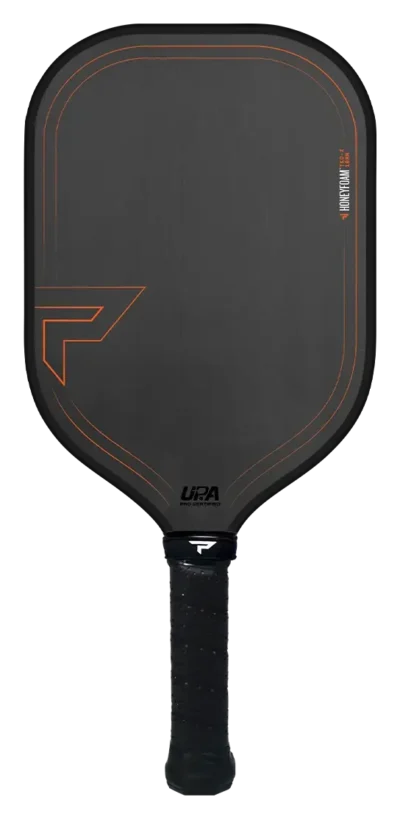
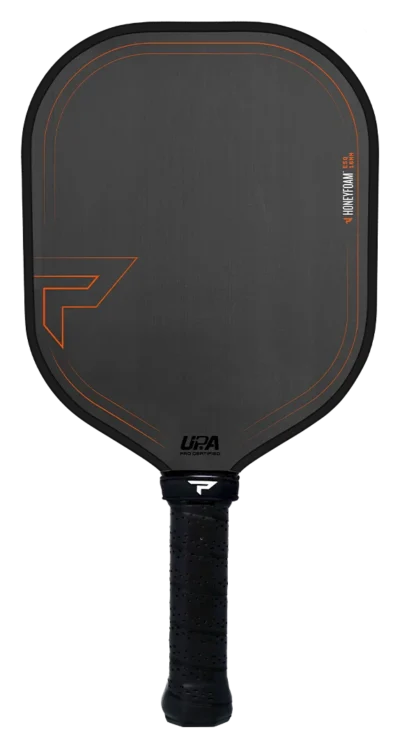
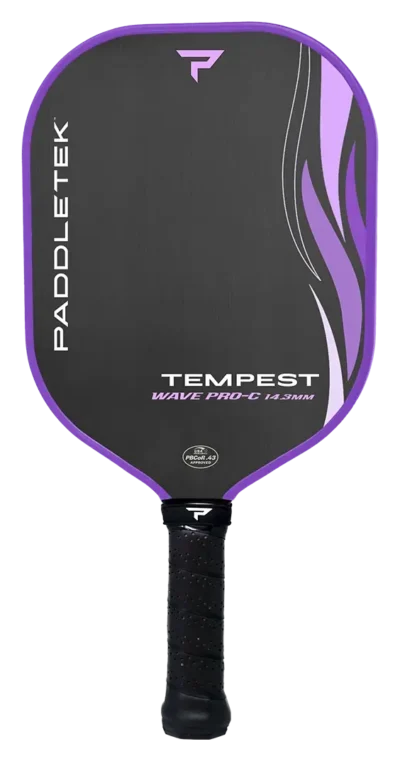
Paddletek’s two Honeyfoam paddles are its foam-core flagships, so the choice comes down to shape. The Honeyfoam ESQ has a wide face built for stability in fast exchanges, and the Honeyfoam TKO-X is the elongated, power-first version with a longer handle. For a raw carbon honeycomb paddle, look at the Tempest Wave Pro-C, a wide control paddle.
Paddletek Paddles on Sale Now
These Paddletek paddles we review are below their list price at Paddletek’s own store. Prices are checked daily.
- Paddletek Bantam GTO-C-50% $99.99
$199.99Buy - Paddletek Bantam ESQ-C-30% $139.99
$199.99Buy
All 9 Paddletek Paddles, Ranked
Highest research score first, built from Paddletek’s published specs.
9.1/10PowerElongated #1 · Best overall
Paddletek’s foam-core power paddle: the elongated Honeyfoam, built for reach and explosive shots in fast rallies.
Best for: players who want elongated reach and foam-core power.
9.0/10All-courtWide-body 
#2 · Wide foam control
Paddletek’s foam-core control paddle: a wide shape with the three-foam Honeyfoam core, built for stability in fast exchanges.
Best for: doubles players who want stability and a big sweet spot in fast exchanges.
8.6/10All-courtWide-body 
#3 · Wide raw carbon control
Paddletek’s best-selling series: a wide Tempest with a forgiving core, built for spin, control and a big sweet spot.
Best for: players who want control and forgiveness at a lower price.
8.6/10All-courtElongated 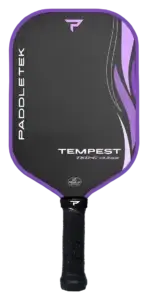
#4 · Reach and spin
The elongated Tempest: Paddletek’s forgiving core in a long shape, built for spin and reach.
Best for: players who want elongated reach and spin for less.
8.5/10PowerElongated 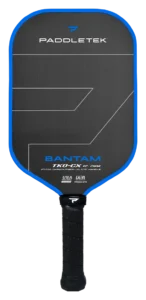
#5 · Two hands on the backhand
The long-handle Bantam: top pickleball pro Christian Alshon’s elongated power paddle, with room for a two-handed backhand.
Best for: two-handed power players who want maximum reach.
Sale8.5/10All-courtWide-body 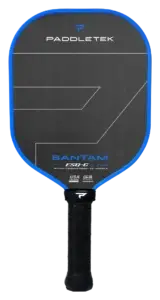
#6 · Light wide-body
Pickleball pro Andrea Koop’s Bantam: a light wide-body with a large, consistent sweet spot and room for two hands.
Best for: players who want a light, forgiving paddle with pop.
8.5/10PowerElongated 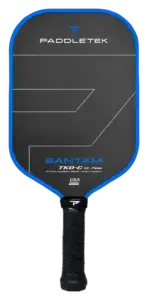
#7 · One-handed power
Top pickleball pro Christian Alshon’s Bantam: an elongated power paddle built for power, spin and reach.
Best for: one-handed power players who want reach.
Sale8.4/10PowerHybrid 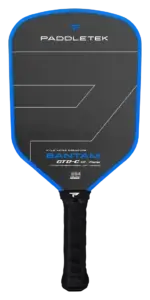
#8 · Aggressive hybrid
Paddletek’s aggressive hybrid: a tapered Bantam built to dictate the pace, and its most-tested shape.
Best for: aggressive all-court players who want power with quick hands.
8.3/10All-courtWide-body 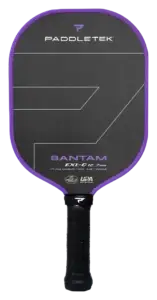
#9 · Compact and quick
A fresh take on Paddletek’s most-medalled shape: a compact, light wide-body Bantam built for versatility.
Best for: players who want a compact, quick-swinging Bantam.
About Paddletek
Paddletek began as a family business. It says it has been changing the game since 2010, when it introduced its honeycomb core. Its paddles come in four families: the Bantam, the Tempest, the Phoenix and the newer Honeyfoam.
The Rest of the Paddletek Lineup
Paddletek sells more paddles than the ones we’ve scored above. Here’s where the rest of the range sits, with Paddletek’s own prices, checked daily. We haven’t reviewed these yet, so they have no research score. Each links to Paddletek’s own store.
Newest
- Bantam Jolt Widebody $224.99
- Bantam Jolt Elongated $224.99
- Tempest Veyra Widebody $179.99
- Tempest Veyra Elongated $179.99
- Phoenix Talon $79.99
- Phoenix Firestorm $79.99
- Phoenix Sabre Carbon $69.99
- Phoenix Genesis Carbon $69.99
- Phoenix Genesis II $59.99
More Paddletek paddles
- Phoenix Genesis Pro $89.99
- Phoenix Genesis $79.99
- Phoenix G6 $69.99
Choosing Your Paddletek Paddle
Paddletek sells three performance lines on its own store: the new foam-core Honeyfoam, the thin-core Bantam C and the more forgiving Tempest. Every Paddletek paddle we review is on the USA Pickleball approved list (checked October 2026), with one catch: the Honeyfoam paddles are approved only in 16 mm.
Honeyfoam, Bantam or Tempest?
- Honeyfoam: a three-foam core (EPP, EVA and a perimeter foam ring) behind a raw carbon face. Buy the standard-thickness version: Paddletek says the 14 mm exceeds USA Pickleball's power limit.
- Bantam C: Paddletek's most powerful polymer core, in two thin-core thicknesses, with a carbon steel twist-weight system. Five shapes, from compact to long-handle elongated.
- Tempest: a more forgiving thin SRT polymer core, pitched at touch, control and spin. Paddletek's best-selling series.
Paddletek publishes swing and twist weights for most Honeyfoam and Bantam shapes, so you can compare how each one swings within the range.
The lineup
- Honeyfoam: ESQ (standard), TKO-X (elongated)
- Bantam C: ESQ-C (wide, light), EXL-C (compact), GTO-C (hybrid), TKO-C (elongated), TKO-CX (elongated, long handle)
- Tempest: Wave Pro-C (standard), TKO-C (elongated)
Paddletek Paddle Questions
What is the best Paddletek pickleball paddle?
The Honeyfoam ESQ in the standard thickness for most players; it and the Honeyfoam TKO-X have Paddletek's two top research scores. For power, the TKO-X.
Which Paddletek paddle line should I choose?
Choose Honeyfoam for a foam-core paddle with pop and stability, Bantam C for maximum power from a thin polymer core, or Tempest for a more forgiving, control-first paddle.
Are Paddletek Honeyfoam paddles tournament legal?
The 16 mm versions are on the USA Pickleball approved paddle list (checked October 2026). Paddletek says the 14 mm versions exceeded USA Pickleball's power threshold, so they are approved for UPA-A play only.
Should I choose a thinner or thicker Bantam core?
The thinner core is livelier and more powerful; the thicker core is softer and more controlled. Both thicknesses of every Bantam C we review are on the USA Pickleball approved list.
What is the difference between the Bantam TKO-C and TKO-CX?
Only the handle: the TKO-CX has a longer handle for two-handed backhands than the TKO-C. Both share the same elongated shape and size.
Are Paddletek paddles good for beginners?
Of the nine we've scored, the Tempest Wave Pro-C is the friendliest start: a wide face and a share of the top sweet-spot rating on our scale. Paddletek's Phoenix line is listed above under The Rest of the Paddletek Lineup, though we haven't reviewed those yet.
Where can I buy Paddletek pickleball paddles?
From Paddletek's own store at paddletek.com, which is where the links on this page go.
Does Paddletek still sell the Bantam TS-5 and EX-L?
Yes. As of October 2026, the Bantam TS-5, TS-5 Pro, EX-L and EX-L Pro are on Paddletek's own store, listed under The Rest of the Paddletek Lineup on this page. We haven't scored them yet; the Bantam paddles we review are the carbon C models.
Other Brands We Review








Next Step
Compare Paddletek Paddles Side by Side
Line up any paddles, from Paddletek or any other brand, on the same research scale.