Carbon vs Fiberglass Pickleball Paddle Faces: Spin, Pop and Grit
Edited by DanPublished Updated How we research
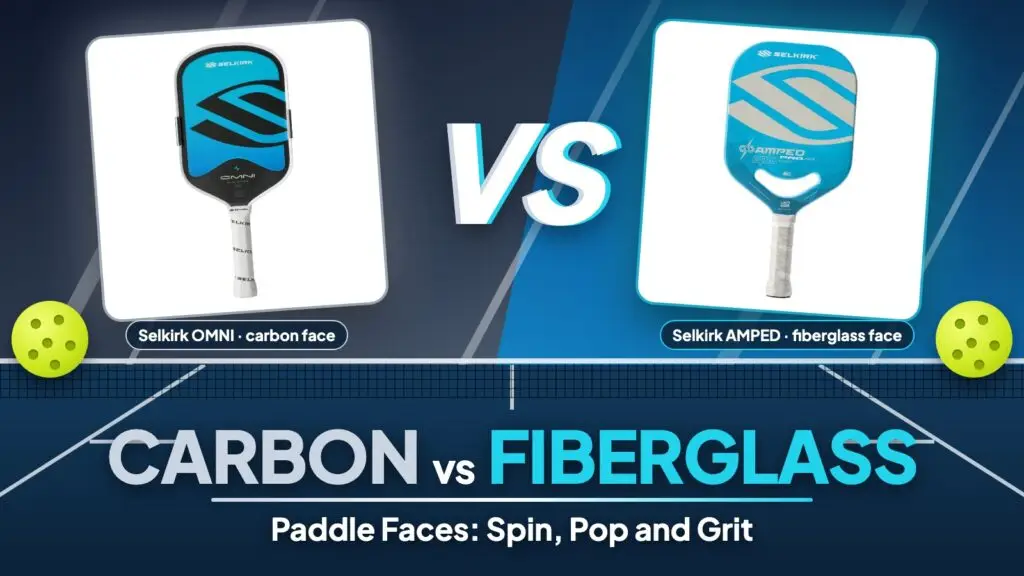
The face is the part of the paddle that touches the ball, and its material and texture shape how a paddle feels, how much it pops and how much spin it can put on the ball. This guide explains the main face types using manufacturers’ own descriptions and how our rating scale treats each one. We haven’t play-tested these paddles.
Quick Answer
- Carbon fiber faces are stiffer. They tend to feel more controlled and, especially in raw (uncoated) form, grip the ball for spin. Most premium paddles use carbon.
- Fiberglass faces flex more, which adds pop and power, and are common on lower-priced paddles.
- Hybrid faces layer the two to balance control and pop.
- Surface texture (grit) adds spin on top of the material, but can wear over time.
Carbon Fiber Faces
Almost every premium paddle we’ve reviewed has a carbon face, and brands describe them in different ways:
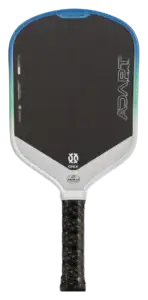
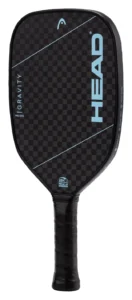
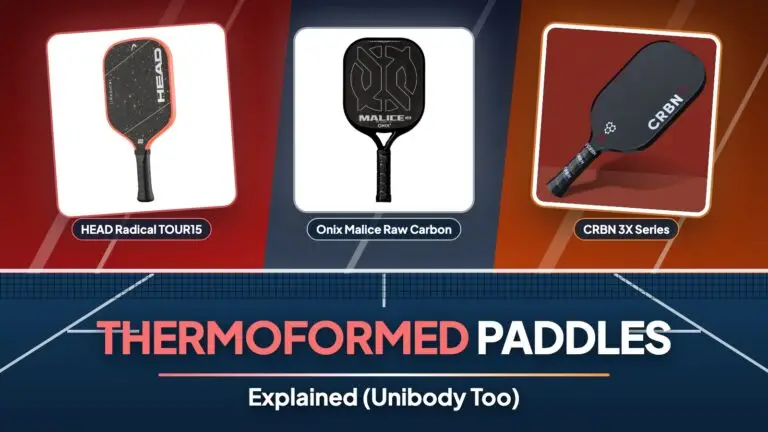
- Raw carbon: carbon fiber left uncoated so its natural texture grips the ball. HEAD’s Micro-Forged Raw Carbon is “uncoated for grip on the ball”, and Onix, CRBN and others use raw carbon on most of their range.
- T700 and 12K: grades and weaves of carbon fiber. T700 (from Toray) appears on CRBN, Onix, HEAD and Selkirk paddles; HEAD’s Gravity PRO EX15 uses a 12K raw carbon face.
- Peel ply: a finishing method where a fabric layer is peeled off after curing, leaving a textured surface. CRBN’s Genesis face is described this way.
- Multi-layer carbon: Selkirk’s Multistrata faces on the OMNI and LABS Project Boomstik use several layers of T700 carbon.
Fiberglass Faces
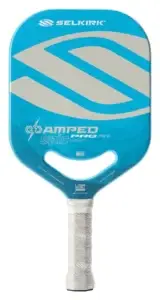
Fiberglass is more flexible than carbon, so the face gives a little more on contact and returns more energy. Selkirk’s AMPED Pro Air uses a FiberFlex+ fiberglass face, and as one of the lowest-priced paddles we review it shows why fiberglass is common in value paddles. Expect more pop and a softer, springier feel, with a little less precision than carbon.
Hybrid Faces
Hybrid faces combine both materials. Examples from our reviews:
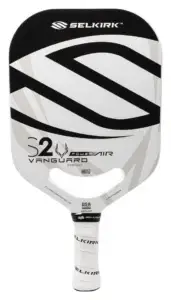
- Selkirk’s QuadFlex face (Vanguard Power Air S2) blends fiberglass and carbon fiber.
- CRBN’s Waves and Genesis add a fiberglass layer to a T700 raw carbon face, while the Barrage uses carbon only.
- 11SIX24’s CFC face on the Jelly Bean 2 places a fiberglass layer between two layers of raw T700 carbon.
Grit and Branded Textures
Many brands add their own surface texture for spin: Selkirk’s InfiniGrit and ProSpin+, 11SIX24’s HexGrit and Onix’s MAXRev are examples. Two points are worth knowing:
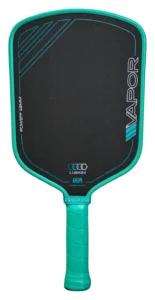
- Texture can wear. 11SIX24 says HexGrit is designed to keep its spin for months rather than only out of the box, but one buyer of the Vapor Power 2 reports it wearing smooth in the sweet spot within four months.
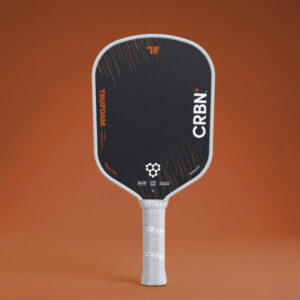
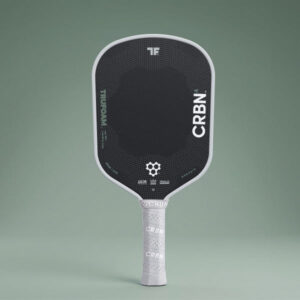
- Not all spin comes from grit. CRBN says its TruFoam paddles generate spin largely through the core’s dwell time, so spin should hold up as the surface wears.
USA Pickleball sets limits on how rough a paddle surface can be, and paddles on its approved list have passed its testing.
How Our Rating Scale Treats Faces
Our spec-based scale gives carbon faces the most points for control and spin, hybrid faces a little less, and fiberglass faces the fewest for control and spin but the most for power. A named, branded texture earns extra spin points over a plain raw-carbon surface. That’s why paddles such as Selkirk’s OMNI and 11SIX24’s Vapor Power 2 reach a perfect 10 for spin.
Which Face Should You Choose?
- For control and spin: a raw carbon face, ideally with a texture the brand stands behind.
- For pop on a budget: a fiberglass face like the Selkirk AMPED Pro Air.
- For a balance: a hybrid face such as CRBN’s Genesis or Selkirk’s QuadFlex.
See every paddle with a perfect spin rating on our spin paddles page, or read foam core vs honeycomb for the other half of how a paddle is built.
Frequently Asked Questions
Is carbon fiber or fiberglass better for a pickleball paddle?
Neither is better for everyone. Carbon fiber faces are stiffer and tend to give more control and spin; fiberglass faces flex more and add pop. Many paddles blend the two.
What is a raw carbon pickleball paddle?
A paddle whose carbon fiber face is left uncoated, so its natural texture grips the ball for spin. HEAD, for example, describes its Micro-Forged Raw Carbon face as uncoated for grip.
Does paddle grit wear off?
It can. Brands design their textures to last, and 11SIX24 says its HexGrit keeps its spin for months, but buyers of textured paddles do sometimes report wear in the sweet spot. CRBN says its foam-core paddles generate spin mainly through the core rather than surface grit.
Which paddles have the best spin?
On our spec-based scale, paddles with carbon faces, a branded texture and an elongated or hybrid shape rate highest. See our spin paddles page for every paddle that scores a perfect 10.
Keep Reading
Next Step
Ready to Compare Paddles?
Put the paddles from any guide side by side and compare them on the same research scale.