11SIX24 Power 2 vs Jelly Bean 2: Which Should You Buy?
 Dan · Editor, 3.5 DUPR player · How we score
Published · Updated
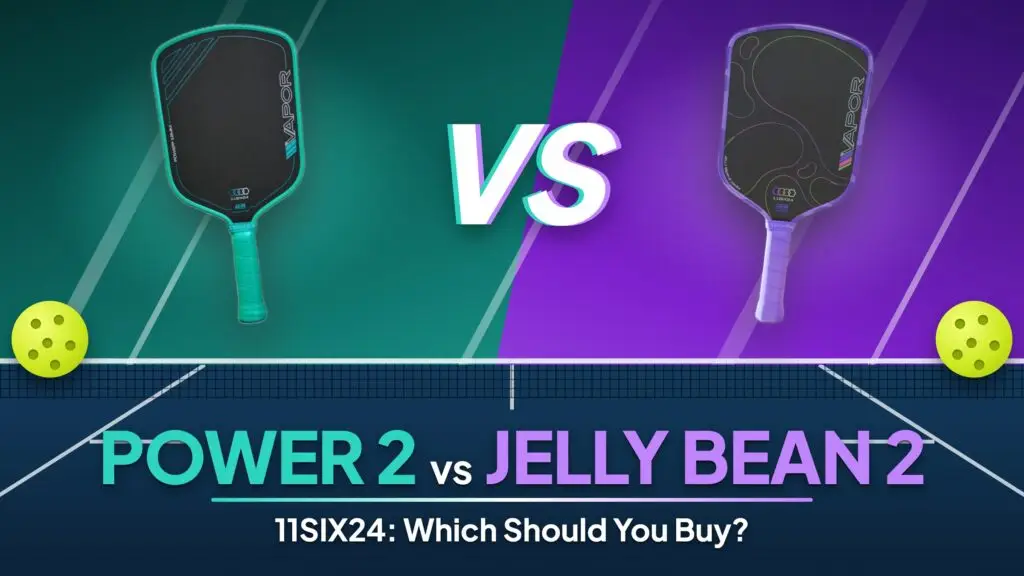
11SIX24 makes two foam-core paddle lines that share the same shapes, and the names don’t tell you much: Power 2 and Jelly Bean 2. 11SIX24 builds one for pop and describes the other as a soft paddle that “plays” rather than “hits”. This guide compares them using 11SIX24’s own published specifications and our spec-based research ratings. We haven’t play-tested these paddles.
Quick Answer
- Power 2: 11SIX24’s pop line, with a full-foam floating core and a carbon face. Look here if you want offense with a forgiving feel.
- Jelly Bean 2: 11SIX24’s soft line, with a softer, denser EMA foam core and a carbon-fiberglass-carbon face for dwell and control at the kitchen. 11SIX24 says plainly that it isn’t a power paddle.
Core and Face
11SIX24 calls the Power 2 its Gen 4 construction: a full-foam floating core that it says gives pop when you load up on drives and a soft, predictable feel on dinks and resets, behind a carbon fiber face.
For the Jelly Bean 2, 11SIX24 uses an EMA foam core that it describes as softer and denser, for longer dwell on the ball, behind a CFC face: two layers of raw Toray T700 carbon around a fiberglass layer.
Both lines use HexGrit, 11SIX24’s own surface texture, which it says is designed to keep its spin level for months rather than only out of the box.
Shapes
Both lines come in the same 11SIX24 shapes:
- Pegasus (wide-body): the shape 11SIX24 recommends for control and touch players
- Vapor (hybrid): the shape 11SIX24 calls its all-round option
- Hurache-X (elongated): the shape 11SIX24 suggests for reach, leverage and two-handed backhands, aimed at power players and former tennis players
- Ultré (hybrid): 11SIX24’s square-faced shape, flat across the top and down both sides
Each shape’s size, handle length and 11SIX24’s published swing and twist weights are on its review.
Why the Jelly Bean 2 Can Rate High for Power
Our research scale gives every foam core the same power points and doesn’t tell a soft foam from a firmer one. So the Jelly Bean 2 can rate as high for power as the Power 2 on our scale, even though 11SIX24 tunes it for control and says it isn’t a power paddle. On this one, go by the maker: the Power 2 is the power line and the Jelly Bean 2 is the control line.
Which Should You Choose?
- You want power with a forgiving feel: a Power 2, such as the all-round Vapor Power 2 or the wide-body Pegasus Power 2.
- You’re an aggressive baseline or former tennis player: the elongated Hurache-X Power 2.
- You live at the kitchen and want a soft paddle: a Jelly Bean 2, such as the Pegasus Jelly Bean 2 or Vapor Jelly Bean 2.
- You want a square face and a soft feel: the Ultré Jelly Bean 2.
Frequently Asked Questions
What is the difference between the 11SIX24 Power 2 and Jelly Bean 2?
11SIX24 builds the Power 2 with a full-foam floating core and a carbon face for pop. It builds the Jelly Bean 2 with a softer, denser EMA foam core and a carbon-fiberglass-carbon face for dwell and control, and says it is not a power paddle. Both use 11SIX24's HexGrit surface texture.
Are 11SIX24 paddles approved for tournaments?
Each paddle's review lists its approval in the spec table, matched to the official USA Pickleball and UPA-A lists. Approval can differ by shape, so check the exact paddle you want.
Why does the Jelly Bean 2 have high power ratings?
Our spec-based scale gives every foam core the same power points and doesn't distinguish soft foams from firm ones. 11SIX24 tunes the Jelly Bean 2 for control, so expect less pop than its ratings suggest.
Which 11SIX24 shape is best for two-handed backhands?
11SIX24 points two-handed players to the Hurache-X, its elongated shape, in both the Power 2 and Jelly Bean 2 lines.
Vapor Power 2 or Hurache-X Power 2?
Same foam core and HexGrit face. 11SIX24 calls the Vapor its all-round hybrid; the Hurache-X is its elongated shape for reach and leverage. Each review shows its ratings on our scale.
Hurache-X or Ultré Jelly Bean 2?
Same soft foam core. 11SIX24 makes the Hurache-X its elongated shape for reach; the Ultré is its square-faced hybrid.
Keep Reading
Next Step
Ready to Compare Paddles?
Put the paddles from any guide side by side and compare them on the same research scale.