Pickleball Paddle Buying Guide
 Dan · Editor, 3.5 DUPR player · How we score
1. Key Factors to Consider
There’s no single best pickleball paddle, only the best paddle for how you play. These six specs decide most of how a paddle feels. Each one is explained below in the same terms our reviews use, so you can read a spec sheet and know what to expect before you buy.
2. Paddle Weight
Weight has the biggest influence on how a paddle feels. Makers list it as a range or an average, and most paddles fall into one of three bands.
Lightweight
Under 7.5 oz
Quicker hands at the net and easier on the arm, but less stable on off-center hits.
None of the 85 paddles we’ve researched so far
Midweight
7.5–8.2 oz
A balance of hand speed and stability. Most paddles sit here.
80 of the 85 paddles we’ve researched
Heavyweight
Over 8.2 oz
More stability and plow-through, at the cost of reaction speed.
5 of the 85 paddles we’ve researched
Two paddles with the same weight can still feel different: swing weight (where the mass sits) matters as much as the number on the scale. Unsure? Start midweight. You can add lead tape later, but you can’t take weight off.
3. Paddle Shape
Shape sets the balance between reach and forgiveness. USA Pickleball and UPA-A rules cap paddle length at 17 inches and length plus width at 24 inches, so a longer paddle is always a narrower one.
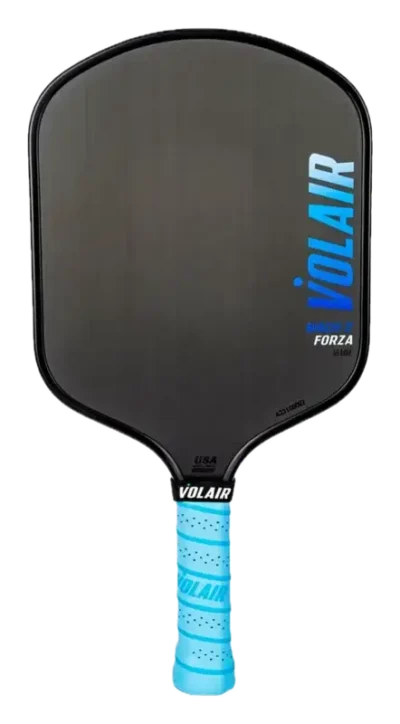
Volair Mach 2 Forza: 15.88 × 8.12 in
Standard / Wide-Body
Wider sweet spot
The widest, shortest face and the most forgiving sweet spot. Makers use both names for this shape.
29 of the 85 paddles we’ve researched
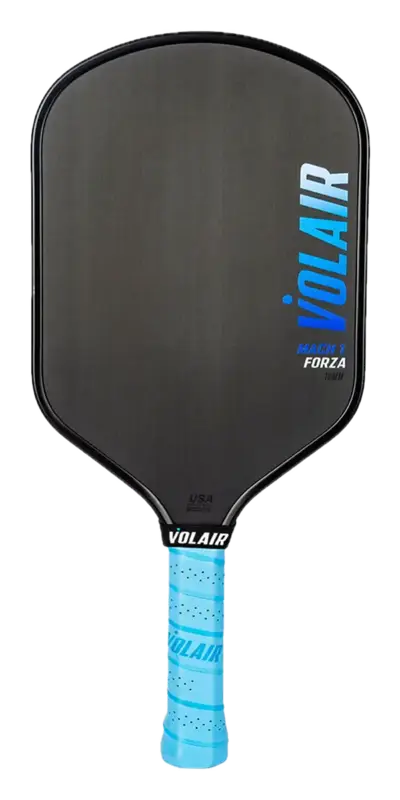
Volair Mach 1 Forza: 16.35 × 7.5 in
Hybrid
Balanced performance
A little longer than standard, for a balance of reach and forgiveness.
20 of the 85 paddles we’ve researched
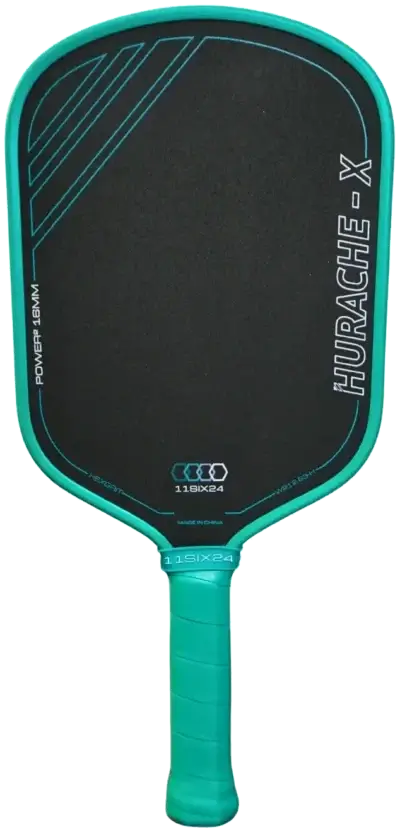
11SIX24 Hurache-X Power 2: 16.5 × 7.5 in
Elongated
More reach and power
The longest face: more reach, leverage and spin potential, with a narrower sweet spot.
36 of the 85 paddles we’ve researched
Shown to the same scale: the Volair Mach 2 Forza (wide-body), Volair Mach 1 Forza (hybrid) and 11SIX24 Hurache-X Power 2 (elongated).
Standard / Wide-Body
Median of 29 paddles
Hybrid
Median of 20 paddles
Elongated
Median of 36 paddles
Newer players usually do best with a standard or hybrid shape. Players who drive from the baseline or play singles often prefer elongated.
Continue Reading
4. Core Material
The core sits between the two faces and shapes how the paddle responds. Most cores are 13 to 16 mm thick. Thicker cores absorb more energy, which usually means a softer feel and easier control in the soft game; thinner cores are firmer and livelier, adding pop at the cost of some touch.
Polymer honeycomb has long been the standard. Newer foam cores are marketed by their makers for more power and a larger sweet spot. Of the 85 paddles we’ve researched, 46 use a polymer honeycomb core (some with foam around the edges) and 39 use an all-foam or foam-based core.
Thickness is the part to watch. 13 mm or thinner is the liveliest, with the most pop; 14 to 15 mm sits between power and control; 16 mm leans toward control and forgiveness; 17 mm and up is the softest and most controlled. On our scale thickness changes power, control and sweet spot, more than the core material does.
Most honeycomb cores are polypropylene. Some are Nomex, which players often describe as firmer and louder, and a few are aluminum. Makers don’t publish data on how much the material alone changes play, so we list it in every review but don’t score it. A full-foam core is different: it adds 1.5 to power on our scale. Foam only around the edges doesn’t, because the core is still mostly honeycomb.
Construction matters too. Many premium paddles are thermoformed or unibody, which seals the edges and can add stability and power; on our scale it adds 0.75 to both power and sweet spot. We list core material, thickness and construction in every review’s specifications so you can compare like for like in our comparison tool. What each spec does, in plain English.
5. Face Material
The face material shapes feel, pop and spin:
- Raw carbon fiber: a textured, controlled feel; popular for spin.
- Fiberglass: more flex and pop, often with a little less control.
- Hybrid and composite faces: blends that aim to combine the two.
- Other materials: some makers use graphite or aramid fiber, or their own composite.
Of the 85 paddles we’ve researched, 57 have a carbon-fiber face, 20 blend carbon with fiberglass, 4 are fiberglass and 4 use another material: graphite, aramid or a composite. Textured faces can wear smoother over time, so treat “maximum spin” marketing with caution.
How Grit Is Regulated
Both governing bodies, USA Pickleball and UPA-A, measure grit as surface roughness, using a Starrett roughness meter. USA Pickleball’s Equipment Standards Manual allows an average of no more than 30 micrometers (Rz, peak to valley) on each face, with no single reading above 33. UPA-A, which certifies paddles for PPA Tour and MLP events, records each paddle’s grit when it’s certified, checks paddles at events against that reading, and caps spin at 2,100 RPM for the paddle’s whole life.
In the rules, grit simply means surface roughness, so raw and peel-ply carbon faces have grit too: a natural texture from the carbon itself. Neither body publishes grit readings for individual paddles. So a branded grit such as HexGrit or InfiniGrit tells you how the maker finishes the face and often how long it’s meant to last, not that it’s rougher than the rules allow. Every approved paddle is under the same limit.
6. Grip Size
A grip that’s too thick limits wrist action; one that’s too thin can make you squeeze harder than you need to. Across the paddles we’ve researched, listed grips run from 4 to 4.3 inches, and 4.125 inches is the most common.
Between sizes? Choose the smaller grip. You can build it up with an overgrip, but you can’t make a grip thinner.
Handle length matters as well: longer handles make room for two-handed backhands and add leverage, while shorter handles leave more of the paddle’s length for the hitting face. Across the paddles we’ve researched, handles run from 4.375 to 6 inches, and 5.5 inches is the most common.
7. Playing Style
Every paddle sits somewhere between power and control. Power comes from swing weight, length, a thinner, firmer core and a lively face. Control comes from stability, a thicker core and a softer response. Spin comes from face texture, how long the ball stays on the face and swing speed.
Be honest about where you win and lose points. Losing rallies at the kitchen? Prioritize control. Struggling to finish points? Look for more power. Browse our picks for power, control, or all-court paddles that balance both. If spin matters most, see our spin picks.
8. Skill Level
Your level changes what to prioritize. Newer players need forgiveness, and experienced players can trade some of it for reach, power or spin.
- Beginner: put forgiveness first. Look for a standard or hybrid shape, a midweight paddle and a thicker core. See paddles for beginners.
- Intermediate: pick for the way you’re starting to play. Lean toward power, control or all-court, and use shape and core thickness to get there. See paddles for intermediate players.
- Advanced: trade some sweet spot for reach, power or spin, and fine-tune weight with lead tape. See paddles for advanced players.
9. Budget
Premium paddles cost more than entry-level models, and the price usually reflects the materials and construction the maker lists, such as carbon faces, foam cores and sealed edges.
Price on its own isn’t a quality signal. Compare the specs and how well they fit your game. Our reviews show each paddle’s price from the maker’s own store, checked daily. Always confirm the price with the store before you buy.
Shopping on a budget? See our best paddles under $150 and paddles on sale.
10. Common Questions
What paddle weight is best for beginners?
Most newer players are comfortable with a midweight paddle (about 7.5–8.2 oz). It balances hand speed and stability, and you can add lead tape later if you want more weight.
What’s the difference between a foam core and a honeycomb core?
Polymer honeycomb is the long-standing standard core. Foam and foam-based cores are newer designs that makers say add power and enlarge the sweet spot. Core thickness matters too: thicker cores usually feel softer and more controlled, thinner cores firmer and livelier.
Should I choose a carbon fiber or fiberglass face?
Raw carbon fiber faces are known for a controlled feel and spin-friendly texture. Fiberglass faces flex more and add pop, usually with a little less control. Hybrid faces blend the two.
What grip size should I get?
Most paddles list a grip just over 4 inches around, and the Grip Size section above shows the range across the paddles we’ve researched. If you’re between sizes, choose the smaller grip: you can build it up with an overgrip, but you can’t make a grip thinner.
Do I need a USA Pickleball approved paddle?
Only for sanctioned play. Events sanctioned by USA Pickleball require a paddle on its approved list, and PPA Tour and MLP events use UPA-A certification. Check that the exact model you’re buying is listed. Each of our reviews shows the approval status as we last checked it.
How do you rate paddles without play-testing them?
Every rating comes from the maker’s published specifications, scored on one public scale that’s the same for every brand. Our Editorial Policy explains how each spec turns into a score.
Next Step
Ready to Compare Paddles?
Use our comparison tool to put paddles side by side and find the ones that match your game.